
Factors That Affect Your AI Face Symmetry Score
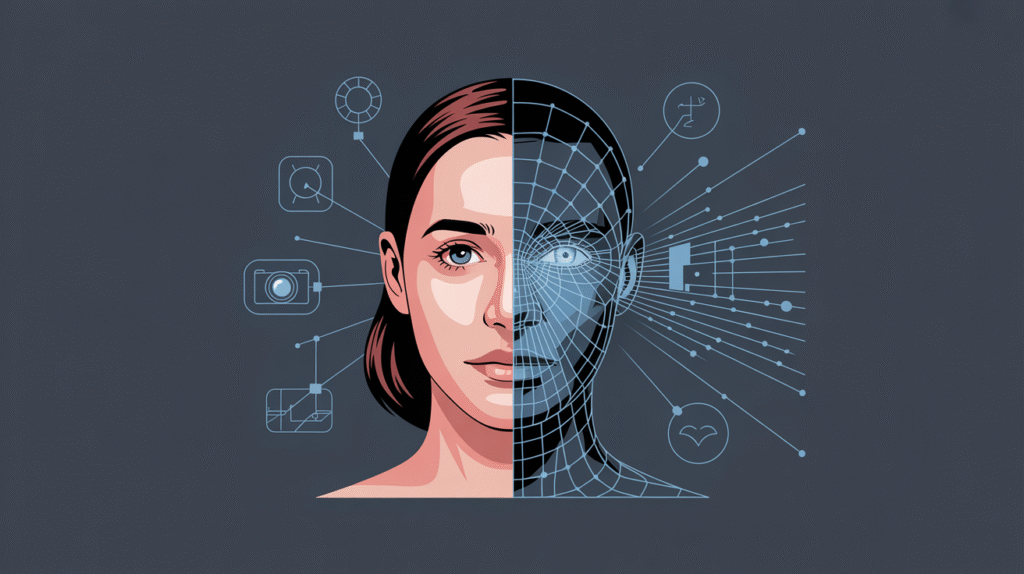
Ever wondered why your AI face symmetry score sometimes changes between photos? It’s not random your result depends on several subtle factors that influence how accurately the AI analyzes your face. Understanding these elements can help you capture a photo that truly reflects your natural balance and improve your overall score.
Want a More Accurate Score?
Looking to get the most precise AI face symmetry score? Try our advanced Face Symmetry Test, a powerful AI tool that scans your facial features and reveals your natural balance with precision. It’s fast, free, and built to give you reliable results in seconds.
Lighting: The Foundation of Accurate Facial Analysis
Lighting plays one of the biggest roles in facial symmetry analysis. Uneven or dim light can cast shadows that make one side of your face appear different from the other. Natural daylight, especially when facing the light source directly, ensures even exposure and helps the AI detect your true facial structure. Soft, balanced lighting minimizes distortion and allows the algorithm to compare both sides of your face precisely.
Camera Angle: Keep It Straight and Centered
A tilted or angled shot can easily affect your AI symmetry accuracy. When one side of your face is closer to the lens, features may appear larger or differently aligned. For the most accurate result, hold your camera straight at eye level and position your face directly toward it. A perfectly frontal pose lets the AI assess proportional differences without distortion.
Facial Expression: Stay Neutral
Smiling, raising your eyebrows, or tilting your lips slightly can all change how symmetrical your face looks. While expressions are natural, they momentarily shift muscle tension and alter alignment. For a reliable AI facial test result, keep a relaxed, neutral expression no smile, no frown. This helps the system map your features exactly as they are.
Background and Contrast: Clarity Matters
A busy or uneven background can confuse the AI, especially if it includes colors or textures similar to your skin tone. A plain, well-lit background provides contrast, helping the algorithm clearly separate your facial outline from your surroundings. The cleaner the backdrop, the more precise your facial symmetry analysis will be.
Camera Quality: Resolution Impacts Accuracy
Not all photos are created equal. A low-resolution image may blur fine facial details, leading to a less accurate symmetry comparison. Try using a smartphone or camera with good resolution to capture sharp, well-defined features. High-quality photos allow the AI to detect subtle asymmetries more effectively.
Head Position: Balance Is Key
If your head is slightly tilted, one side of your face appears shorter or more shadowed than the other. Before taking your photo, check that your head is upright and centered in the frame. Even a small tilt can change how your AI face symmetry score is calculated.
Hair, Accessories, and Obstructions
Loose hair strands, hats, glasses, or other accessories can cover parts of your face, disrupting the facial analysis. Always make sure your entire face from forehead to chin is visible. Tuck your hair back and remove accessories to let the AI analyze your features accurately.
Why Scores May Differ Between Photos
It’s common for results to vary slightly between photos. Changes in lighting, expression, or angle can all influence your score. However, these fluctuations don’t mean the AI is inaccurate they simply highlight how sensitive symmetry is to external conditions. Consistency in photo setup ensures more reliable comparisons over time.
How to Get a More Reliable Score
For the best results, combine the insights from this article with the steps in our guide, How to Take the Perfect Photo for a Face Symmetry Test where we break down exact photo-taking techniques for optimal AI readings. When lighting, angle, and expression are aligned, you’ll get a clear and consistent measure of your true facial symmetry.
Final Thoughts
Your AI face symmetry score isn’t just a number, it’s a reflection of how your facial features align under specific conditions. By controlling lighting, expression, and camera position, you help the AI capture your genuine structure. Whether you’re curious about balance, beauty, or just exploring facial analysis, every detail counts toward a more accurate and meaningful result.